ArcelorMittal Extends Liberia Mining Agreement To 2050, Lifts Total Investment To $3.5 Billion

Quidah is an online platform that connects investors with curated opportunities and expert insights on Africa’s emerging markets, while offering businesses promotional services, partnership facilitation, and market intelligence to attract capital and grow their operations.
Industries
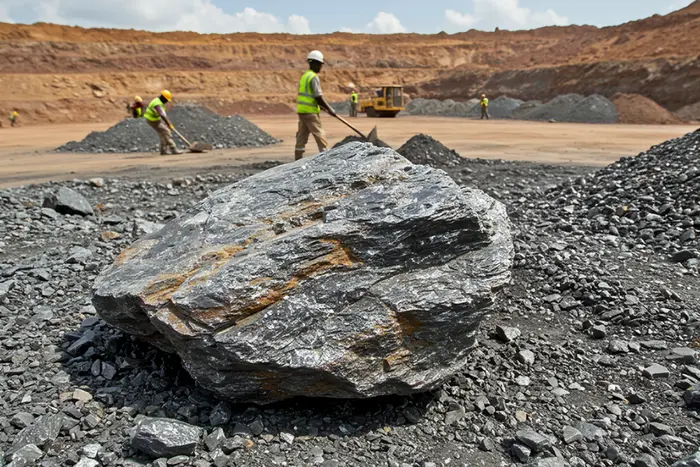
ArcelorMittal says it has extended its long-term agreement with the Liberian government for mineral mining and shipping, raising its total investment commitment in the country to $3.5 billion. The updated terms run through 2050, with an option to renew for another 25 years, and include a $200 million payment for extended mining rights and reserved access to rail capacity.
The deal appears to reinforce ArcelorMittal’s long-term logistics and export strategy in Liberia, where access to the rail line is as important as the mines themselves. By securing both mining rights and transport capacity, the company is locking in the infrastructure it needs to move ore efficiently over decades rather than years.
For Liberia, the arrangement signals continued reliance on a major foreign investor for jobs, infrastructure use, and export earnings. The scale of the commitment suggests that the company sees the country as a core part of its iron ore portfolio, not just a short-term operating base.
The extension also highlights a broader pattern in African mining: governments are trying to balance long-term investment inflows with stronger control over strategic assets such as rail, ports, and mineral rights. In deals like this, the real value is not only in the mine but in the logistics corridor that makes large-scale extraction viable.
At $3.5 billion, ArcelorMittal’s total investment footprint is substantial, and the 2050 horizon gives both sides more certainty. The main question now is how much of that value will translate into broader local economic benefits beyond exports, especially in infrastructure, employment, and supplier development.