Libya's NOC Signs Production-Sharing Deals With Foreign Firms After Licensing Round

Quidah is an online platform that connects investors with curated opportunities and expert insights on Africa’s emerging markets, while offering businesses promotional services, partnership facilitation, and market intelligence to attract capital and grow their operations.
Industries
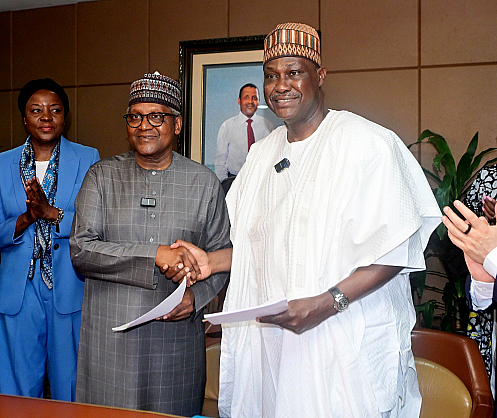
Libya's National Oil Corporation has signed production-sharing agreements with several international energy companies following the country's first licensing round in nearly two decades, its chairman Massoud Suleman said on Monday. The agreements were signed with Spain's Repsol and Turkey's state-owned Türkiye Petrolleri, Italy's Eni and QatarEnergy, and a consortium comprising Hungary's MOL Group, Türkiye Petrolleri and Repsol.
The deals follow Libya's 2025 bid round, under which the NOC awarded exploration acreage to foreign companies as the OPEC member seeks to attract investment and raise oil production capacity to 2 million barrels per day from around 1.4 million bpd currently. Suleman said the agreements reflected growing confidence in Libya's oil and gas sector and would support exploration, development and production growth.
Libya awarded exploration blocks in February to companies including Chevron, Eni, QatarEnergy and Repsol in its first licensing round since 2007, despite persistent political divisions between rival administrations in the country's east and west. This licensing round marks a significant step in Libya's efforts to reopen its oil sector to international investment.
The production-sharing agreements represent a major milestone for Libya's energy sector, which has faced challenges due to political instability and conflict in recent years. The involvement of major international energy companies signals renewed interest in Libya's substantial oil and gas reserves.
Massoud Suleman's statement posted on social media highlighted the strategic importance of these partnerships for Libya's economic recovery. The NOC chairman emphasized that the agreements will help modernize exploration techniques and improve production efficiency across Libyan oil fields.
The consortium deal involving MOL Group, Türkiye Petrolleri and Repsol demonstrates the collaborative approach being taken to develop Libya's energy resources. This multi-company partnership brings together diverse expertise and financial resources to support large-scale exploration projects.
Libya's goal of reaching 2 million barrels per day production capacity reflects the country's ambition to restore its position as a major oil producer in the Mediterranean region. Achieving this target would significantly boost Libya's export revenues and contribute to national economic stability.