Three African Countries Team Up to Supply Europe With 30 Billion Cubic Metres of Gas

Quidah is an online platform that connects investors with curated opportunities and expert insights on Africa’s emerging markets, while offering businesses promotional services, partnership facilitation, and market intelligence to attract capital and grow their operations.
Industries
Nigeria, Niger and Algeria are advancing a 4,128-kilometre gas pipeline that could supply Europe with up to 30 billion cubic metres of natural gas annually as it seeks alternatives to Russian energy. Construction has started in Algeria, with Niger expected to begin work on its segment in 2027, marking progress on one of Africa's largest energy projects.
The pipeline aims to transport Nigerian gas via Niger to Algeria, where it will connect with existing infrastructure to reach European markets. It is designed to stretch about 4,128 kilometres from Warri in southern Nigeria to Algeria's Hassi R'Mel gas hub, passing through Niger.
Construction has begun on the Algerian section of the Trans-Saharan Gas Pipeline, advancing a decades-old plan to carry Nigerian gas through Niger to European markets. The start of work marks a major step for one of Africa's largest planned energy infrastructure projects, which will cross Nigeria and Niger before linking with Algeria's extensive pipeline and export network.
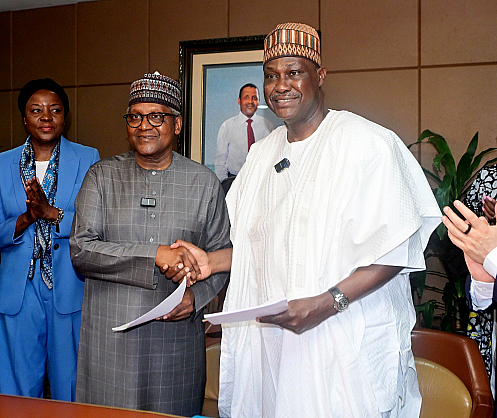
Algerian Energy and Mines Minister Mohamed Arkab attended the launch alongside Nigeria's Minister of State for Petroleum Resources Ekperikpe Ekpo and Niger's Petroleum Minister Hamadou Tini. The pipeline is expected to transport as much as 30 billion cubic metres of natural gas annually when completed.
From Hassi R'Mel, the gas can be moved through Algeria's existing network to Mediterranean export terminals and pipelines serving European markets. A large share of the pipeline infrastructure in Algeria is already in place, limiting the amount of new construction required there.
Meanwhile, Niger is expected to begin work on its 720-kilometre section in early 2027, according to Petroleum Minister Hamadou Tini. Tini described the pipeline as a "historic undertaking that would have a significant economic and social impact on communities along the pipeline route."
Project documents cited by local media indicate that the new section will run about 1,210 kilometres from the border with Niger to Aoulef in southern Algeria. The project would give Nigeria an additional route to European markets, complementing the LNG cargoes it already exports by sea, while strengthening Niger's role as a transit country and reinforcing Algeria's position as a major supplier to Europe.
Arkab described the pipeline as a "driver of economic and social development, a source of wealth and employment, and a tool for strengthening African energy integration" while supporting regional and international energy security. Algeria already supplies about 12% of the European Union's gas imports, giving it the infrastructure to move Nigerian gas into the market.
Interest in the project has grown since Russia's invasion of Ukraine in February 2022 pushed Europe to seek alternative supplies. The European Union plans to end its reliance on Russian gas by late 2027, with LNG imports due to stop by December 31, 2026, and pipeline-gas imports scheduled to end by September 30, 2027.
Meanwhile, the Trans-Saharan project faces competition from the proposed Nigeria-Morocco Gas Pipeline, another major infrastructure plan designed to carry Nigerian gas to Europe. Unlike the shorter Saharan route, the Nigeria-Morocco pipeline would follow the Atlantic coast, connecting several West African countries before reaching Morocco and potentially Europe.